

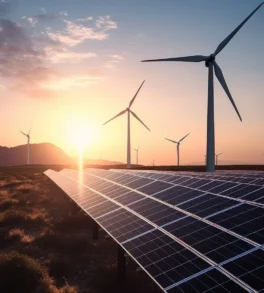
Solar Panels, Solar Power, and How It All Works
Introduction: Solar Beyond the Buzzwords
Solar energy is often marketed as a simple concept—install panels, reduce bills, save the planet. While the outcome is simple, the technology behind solar power is a well-engineered system built on physics, material science, and electrical design.
This Knowledge Centre is meant for readers who want more than surface-level answers. Whether you are a homeowner, a business owner, or simply someone curious about clean energy, this section helps you understand what you are investing in and why it works.
What Solar Panels Really Are More Than Just Panels on a Roof
Solar panels are energy conversion devices. Their purpose is not to store electricity, but to convert sunlight into usable electrical power. Each panel consists of multiple solar cells connected together to produce electricity whenever sunlight is available.
The electricity generated by solar panels is direct current (DC). This happens silently, without fuel, and without any moving parts—one of the reasons solar systems are extremely reliable and long-lasting.
What Solar Panels Are Made Of The Science Inside the Panel
At the heart of every solar panel are silicon solar cells. Silicon is a semiconductor material that reacts to sunlight by releasing electrons. These cells are engineered to create an internal electric field, allowing electricity to flow when sunlight hits the surface.
The solar cells are protected by multiple layers. A high-strength tempered glass layer sits on top, allowing sunlight to pass through while protecting the cells from rain, dust, and impact. Beneath this, an encapsulant layer seals the cells and prevents moisture damage. A protective backsheet and a sturdy aluminium frame complete the structure, ensuring the panel can withstand harsh outdoor conditions for decades.
Together, these layers allow modern solar panels to perform reliably for 25 to 30 years.
How Solar Panels Generate Electricity The Photovoltaic Effect Explained Simply
Solar panels operate on a principle known as the photovoltaic effect. When sunlight falls on the silicon cells, energy from the sunlight excites electrons within the material. These electrons begin to move in a specific direction due to the internal electric field in the cell.
This movement of electrons creates electricity. The generated electricity flows out of the panel through cables in the form of DC power, ready to be converted into a form that your home or business can use.
No combustion. No noise. Just physics at work.
While solar panels generate electricity, that electricity cannot be used directly in homes or industries. This is where the solar inverter becomes essential.
The inverter converts DC electricity from the panels into alternating current (AC), which is the type of power used by electrical appliances and the grid. Beyond conversion, the inverter also manages voltage, synchronizes with the grid, optimizes power output, and ensures system safety.
In simple terms, if solar panels are the muscles of the system, the inverter is the brain.
What our clients say about our services
Ashley Jonathon
Miami, USA
Olivia Bennett
Califonia, USA
Eris Stocklin
Texas, USA
Sophia Brooks
Washington, USA
Max Weber
Califonia, USATypes of Solar Power Systems Different Systems for Different Needs
Solar power systems are designed in different configurations based on how electricity is consumed and whether backup power is required.
On-Grid Solar Systems are connected directly to the electricity grid. Solar power is used first, and any excess energy is sent to the grid through a net meter. When solar generation is low, electricity is drawn from the grid. These systems offer the highest financial savings and the fastest return on investment.
Hybrid Solar Systems combine solar panels with battery storage and grid connection. During the day, solar powers the loads and charges batteries. During power cuts, stored energy is used. These systems are ideal for locations with unreliable grid supply or critical power needs.
Off-Grid Solar Systems operate completely independently of the grid, relying entirely on batteries. They are primarily used in remote areas where grid electricity is unavailable. For most urban users, off-grid systems are unnecessary.
How Power Flows in a Solar System What Happens Throughout the Day
Solar systems work automatically in the background. In the morning, solar generation begins as sunlight increases. During peak daylight hours, solar power handles most or all electrical loads. Any extra energy is either exported to the grid or stored in batteries, depending on the system type.
In the evening or at night, electricity is drawn from the grid or batteries without any manual switching. For the user, the experience is seamless.
Performance, Efficiency, and Real-World Factors
Why Design Matters More Than Wattage
The actual performance of a solar system depends on several factors—sunlight availability, roof orientation, shading, temperature, and installation quality. A well-designed system with proper orientation and minimal shading will always outperform a poorly designed system, even if the panels have higher wattage.
This is why professional design and engineering are critical to long-term performance.
Solar is not just about saving on bills—it is about energy independence and long-term stability.
Final Perspective
Solar power is not magic and not a shortcut.
It is applied science executed correctly.
When designed, installed, and maintained properly, a solar system works quietly in the background—day after day, year after year—reshaping how energy is produced and consumed.